Industrial robots are transforming modern manufacturing through enhanced efficiency and precision. Their integration into various processes reduces errors and labor costs, reshaping production dynamics. As industries increasingly rely on automation, the implications for the workforce are profound. Changes in skill requirements and job roles are emerging, yet the extent of this transformation remains to be fully understood. Exploring these developments reveals critical insights into the future of manufacturing and labor.
The Benefits of Industrial Robots in Manufacturing
Although the initial investment in industrial robots may be significant, their integration into manufacturing processes yields substantial long-term benefits.
These systems facilitate cost savings through reduced labor expenses and minimized errors.
Furthermore, productivity enhancement is achieved via increased operational speed and precision.
Ultimately, the strategic deployment of industrial robots empowers manufacturers to optimize efficiency, thereby fostering greater autonomy and flexibility in production.
Key Applications of Industrial Robots Across Industries
The integration of industrial robots in manufacturing processes extends beyond mere cost savings and productivity enhancement; these systems are also pivotal in a variety of applications across multiple industries.
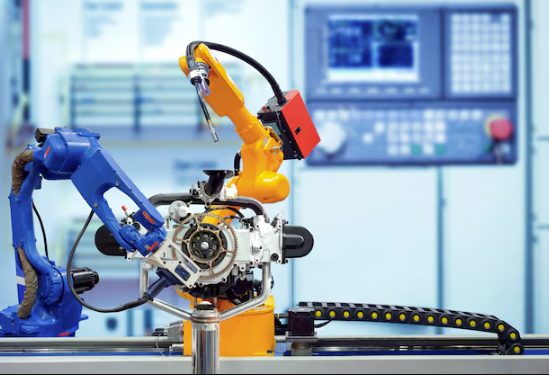
Key applications include welding automation, where precision and repeatability are critical, and packaging solutions that streamline operations and enhance product delivery.
These versatile systems contribute significantly to efficiency and quality across diverse manufacturing environments.
How Are Industrial Robots Changing the Workforce Landscape?
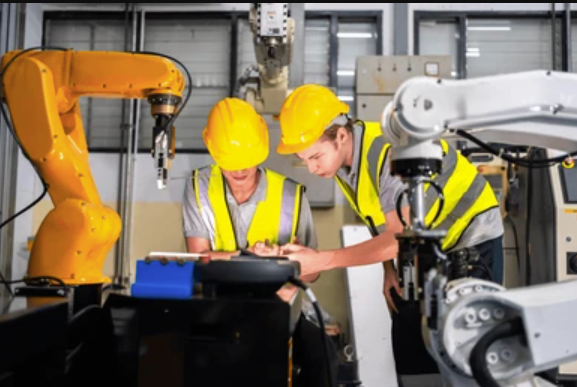
How significantly are industrial robots reshaping the workforce landscape? The rise of automation leads to substantial job displacement, necessitating a shift in workforce dynamics.
As robots undertake repetitive tasks, skill evolution becomes paramount, emphasizing advanced technical capabilities and adaptability. Workers must embrace continuous learning to thrive in this transformed environment, ensuring they remain relevant in a landscape increasingly defined by technological advancement.
See also: Immersive Technologies and the Future of Digital Interaction
Future Trends in Industrial Robotics and Manufacturing Automation
As advancements in technology continue to accelerate, the future of industrial robotics and manufacturing automation is poised for transformative changes that will redefine operational efficiency and productivity.
The integration of collaborative robots will enhance human-robot interactions, while autonomous systems will streamline processes by reducing human intervention.
These trends signify a shift towards more flexible, adaptable manufacturing environments that promote innovation and operational freedom.
Conclusion
In conclusion, industrial robots are not merely tools but the backbone of modern manufacturing, weaving efficiency and precision into the fabric of production processes. As industries adapt to this robotic revolution, the workforce must evolve, acquiring new skills to thrive in an increasingly automated environment. Looking ahead, the integration of collaborative and autonomous robots will continue to reshape the industry, driving innovation and fostering an agile manufacturing landscape that meets the demands of tomorrow’s economy.