Industrial robots have become integral to manufacturing processes, offering enhanced efficiency and precision. Their applications span various tasks, including welding and assembly, which contribute to improved product quality and reduced operational costs. However, the integration of these machines presents unique challenges that manufacturers must navigate. As the industry evolves, understanding the implications of robotics on production dynamics will be crucial for future competitiveness and sustainability. What specific trends will shape this landscape moving forward?
The Various Applications of Industrial Robots in Manufacturing
Although industrial robots have been employed in manufacturing for several decades, their applications have diversified significantly, reflecting advancements in technology and the evolving needs of the industry.
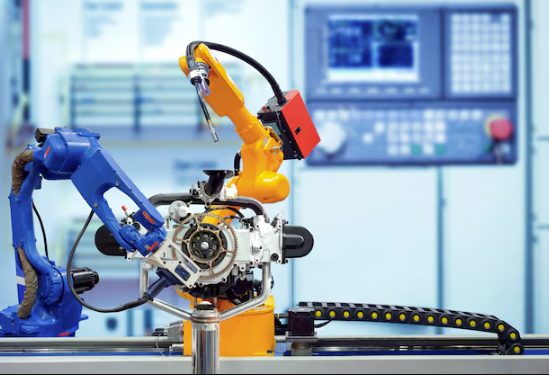
Notably, welding automation has emerged as a critical function, enhancing precision and efficiency. Additionally, robots are integral to modern assembly lines, optimizing production processes and ensuring consistent quality while allowing manufacturers greater flexibility in operations.
Key Benefits of Implementing Industrial Robots
Implementing industrial robots in manufacturing environments offers a multitude of advantages that significantly enhance operational efficiency and productivity.
Key benefits include substantial cost savings through reduced labor expenses and minimized waste. Additionally, robots provide increased precision in tasks, ensuring consistent quality and reducing the likelihood of errors.
This combination of factors contributes to a more competitive manufacturing landscape, fostering innovation and growth opportunities.
Challenges and Considerations When Integrating Robotics
While the integration of robotics into manufacturing can yield significant advantages, it also presents a range of challenges that organizations must navigate.
Key considerations include the complexity of robotic integration and the necessity for workforce adaptation.
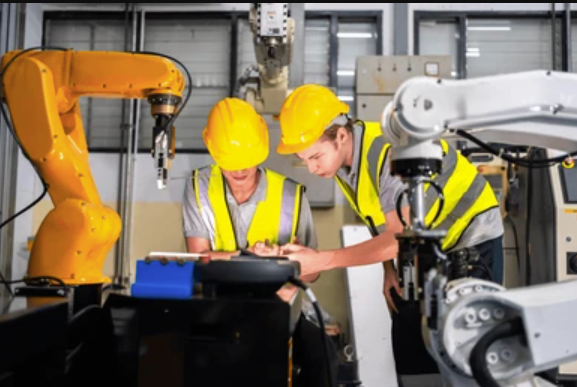
Employees may require retraining to effectively collaborate with automated systems, and organizations must address potential resistance to change while ensuring seamless integration into existing processes.
See also: Immersive Technologies and the Future of Digital Interaction
Future Trends Shaping Industrial Robotics in Manufacturing
As the manufacturing landscape evolves, several emerging trends are poised to redefine the role of industrial robotics.
Cognitive automation facilitates advanced decision-making, enhancing operational efficiency.
Concurrently, collaborative robotics is transforming workforce dynamics by enabling seamless human-robot interactions.
These trends will not only optimize production processes but also empower workers, fostering a more adaptable and innovative manufacturing environment that champions autonomy and efficiency.
Conclusion
In conclusion, industrial robots serve as the backbone of modern manufacturing, seamlessly weaving efficiency, precision, and innovation into the fabric of production processes. As manufacturers navigate the complexities of integration and adaptation, the collaborative synergy between humans and robots paints a promising future. With continuous advancements on the horizon, the evolution of industrial robotics will not only enhance operational capabilities but also carve pathways toward sustainable growth in an increasingly competitive landscape.